CSD&M 2026
Complex Systems Design & Management (CSD&M) conference
19 & 20 NOVEMBER 2026 | PARIS
Mastering complex engineered systems is a fundamental strategic challenge
Complex Systems Design & Management (CSD&M) conference is a widely open meeting event dedicated to academic researchers, industrial and governmental actors who are interested in complex industrial systems engineering. The event is not limited to the existing specialists of the subject! The 2-day conference allows since 2010 to discover and share about theories, methods and tools that have been developed to allow to manage the increasing complexity of the technical systems you must design and implement. Thanks to its past 15 editions, CSD&M has become the conference of reference in the field of complex industrial systems architecture & engineering.
| Day 1 – November 19
08:30 am
Participant welcome
09:00
Welcome speech by the Chairs

Pascale Marangé
Academic Chair of the Program Committee

Marco Ferrogalini
Industrial Chair of the Program Committee
09:15
Opening Keynote
10:00
Introducing MBSE into space projects: challenges and perspectives
This paper reports customer-side experiences introducing MBSE into complex space projects, highlighting recurring obstacles such as tool fragmentation, limited interoperability, IT/licensing constraints, and IP, cybersecurity, and regulatory barriers across multi-stakeholder supply chains. It argues that successful MBSE adoption is not merely a tooling issue but requires broader engineering competency-building, governance, shared standards, and a clearly defined source of truth across models and documents.
___
Marcel Verhoef — European Space Agency, Noordwijk, The Netherlands
Catherine Morlet — European Space Agency, Noordwijk, The Netherlands
Nils Fischer — European Space Agency, Noordwijk, The Netherlands
10:30
MBSE Model Exchange Across Extended Enterprise: A STEP AP242-Based Approach
Liebherr Aerospace Toulouse’s SAME_EE platform advances MBSE model exchange in extended enterprise contexts by replacing its earlier ontology-mapping approach—which suffered scalability and maintainability issues from client-specific connectors—with a STEP (AP242)-based standardized method. The paper details SAME_EE’s operating principles, implementation, and results, positioning it as a more generic and sustainable solution for MBSE interoperability.
___
Laura Giusti — Liebherr Aerospace Toulouse
Julien Rohmer — Liebherr Aerospace Toulouse
Erwan Livolant — AFNet Services
Pascal Hubert — AFNet Services

Laura Giusti

Julien Rohmer
11:00
Coffee break
11:30
Beyond the Architecture: The Next Evolution of Digital Engineering for Complex Space Systems
This presentation argues that STScI’s decades of running ground segment operations for Hubble, JWST, and Roman reveal a reusable multi-mission architecture, but realizing it requires unifying digital engineering methodology (CESAM, ARCADIA, SysML v2) with operational/traceability evidence into one federated, tool-agnostic platform. It closes with three strategic choices for agency leadership: funding architecture as a mission vs. multi-mission asset, prioritizing evidence coverage vs. model completeness at review gates, and pursuing interoperability via common methods vs. common semantics.

Justin Trammell, PhD
Principal Project Engineer
Systems Engineering Integration & Test and Operations (SEITO)
12:00 pm
Mapping the ESA MBSE Methodology to MATLAB System Composer for CubeSat Mission Development
This paper analyzes the correspondence between the ESA MBSE Methodology and MATLAB System Composer, identifying tool gaps and alternative procedures needed to apply the methodology to CubeSat missions, whose constraints differ from traditional space projects. The outcome is a set of CubeSat-specific modelling guidelines and architectural procedures that establish the methodological basis for a future reusable CubeSat reference model in MATLAB.
___
Samuele Enzo — CISAS ”Giuseppe Colombo”, University of Padova, Padova, Italy
Nils Fischer — European Space Agency, ESTEC, Noordwijk, The Netherlands
Marcel Verhoef — European Space Agency, ESTEC, Noordwijk, The Netherlands
Carlo Bettanini — CISAS ”Giuseppe Colombo” and Department of Industrial Engineering, University of Padova, Padova, Italy
12:30
Engineering’s Hidden AI Advantage: Turning Organizational Knowledge into Executable Models
Many organizations are experimenting with AI, but few recognize that their greatest advantage already exists in engineering artifacts accumulated over years. Requirements, architecture, executable models, test results, and design decisions capture different parts of this organizational knowledge. As these artifacts become connected, executable models make that knowledge actionable for AI agents. This presentation examines how organizations can build a strategic AI asset that helps agents understand design intent, explore alternatives, and extend engineering expertise across the development lifecycle.

Jason Ghidella
Sr. Principal Technologist at MathWorks
01:00
Lunch – Networking
02:15
Keynote #2
03:00
Decision Management in Systems Engineering: 10 Insights from Industry Experts
Drawing on nine interviews with Airbus systems architects and engineers, this study derives ten practitioner insights into how design decisions are managed within MBSE. These insights are translated into a set of requirements for a decision management framework grounded in industrial practice, aimed at producing tools engineers will actually adopt.
___
Nidhal Selmi — IRIT Computer Science Research Institute of Toulouse
Jean-Michel Bruel — IRIT Computer Science Research Institute of Toulouse
Sébastien Mosser — McSCert – McMaster Centre for Software Certification Information Technology
Matthieu Crespo — Airbus

Nidhal Selmi
03:30
Minimizing replications in business process simulation
This paper presents an autonomous replication control framework for BPMN/BPSim simulations that dynamically determines the number of runs needed using a sequential confidence-interval criterion and look-ahead verification, guaranteeing statistically reliable results. Tested on four benchmark and industrial models, the approach cuts simulation effort by up to two orders of magnitude compared to fixed-replication methods, while preserving statistical precision.
___
Mihal Brumbulli — PragmaDev
Emmanuel Gaudin — PragmaDev

Mihal Brumbulli

Emmanuel Gaudin
04:00
Coming soon
04:30
Coffee break
05:00
MBSE tailoring for the development of a fusion reactor
In a period where energy crises are happening more frequently and energy needs keep soaring, Fusion energy appears like an ideal candidate solution (carbon free, abundant fuel, much fewer exploitation risks when compared to fission energy, etc.)
However, Fusion technology is so complex that after more than 50 years of development it is still not commercially available.
Impacts of Fusion technology complexity and its associated development risks can be migitated with the use of a tailored MBSE framework
___
Julien Mansion — GenF

Julien Mansion
05:30
Evaluation of systems engineering methodologies – RobAFIS case study
This study evaluates the NumInIS and OOSEM systems engineering methodologies as applied by less experienced INSA Toulouse student teams in the RobAFIS 2026 competition, drawing on team feedback and jury evaluations to identify strengths and weaknesses. The results reveal gaps between theory and practice, pointing to the need for more accessible documentation and methodological flexibility, offering guidance for both practitioners and methodology designers.
___
Baptiste Aliaga — LAAS-CNRS, Université de Toulouse, CNRS, INSA Toulouse
Claude Baron — LAAS-CNRS, Université de Toulouse, CNRS, INSA Toulouse, IRIT

Baptiste Aliaga
06:00
Coming soon
06:30
End of day 1
11h45

Alexia Favre
Responsable métier

Gaetan Lautram
Ingénieur Systèmes
Alice MAIRE-AMIOT
Ingénieure Systèmes
| Day 2 – November 20
8:30 am
Participant welcome
09:00
Welcome speech by the Chairs
09:15
State of the art and main lessons learnt of the SE/MBSE deployment at Airbus
SE/MBSE transformation started back in 2019 thanks to the launch of DDMS transformation program (Digital Design Manufacturing and Service). This presentation intends to provide an overview of what has been achieved so far, what are the main lessons learnt and what are the next challenges to finally deploy SE/MBSE at scale including the extended enterprise.
Marco Ferrogalini
Vice President, Head of Systems Engineering/MBSE
09:15

Karin Breitman
Technical Director, Office of the CTO
10:00
Exploring the potential of the Industrial Metaverse in Model-Based Systems Architecting: hope beyond the hype?
This paper synthesizes recent research into a 3D, interactive virtual environment for systems architecting, aiming to replace abstract 2D MBSE diagrams and lower barriers for non-expert stakeholders. Results indicate these 3D interfaces improve user satisfaction, intuitive comprehension, and workspace awareness, supporting broader MBSE adoption and multidisciplinary collaboration.
___
Romain Pinquié — Univ. Grenoble Alpes, CNRS, Grenoble INP, G-SCOP
Sergio Camilo Medina Galvis — Univ. Grenoble Alpes, CNRS, Grenoble INP, G-SCOP
Haobo Wang — Univ. Grenoble Alpes, CNRS, Grenoble INP, G-SCOP
Ghislain Mugisha — Univ. Grenoble Alpes, CNRS, Grenoble INP, G-SCOP
Hugo Falgarone — Skyreal
Juliette Viret — Skyreal

Juliette Viret

Romain Pinquié
10:30
Coming soon
11:00
Coffee break
11:30
The Roles of Humans and Machines in Early-Stage Design Activities for System Architecture Development
This paper analyzes product development approaches to map the roles of humans versus machines in early-stage system design, distinguishing routine tasks suited to automation from creative tasks requiring human judgment. It further identifies the specific early-stage design phases where decision-maker involvement is most critical.
___
Yaroslav Menshenin — CentraleSupélec
Marija Jankovic — CentraleSupélec

Yaroslav Menshenin
12:00 pm
Robustness of Transdisciplinary Integration in Complex Socio-Technical Systems: Evidence from AI-Enabled Aerial Robotic Swarm Shows
This study applies a Transdisciplinary Integration meta-model and Disciplinarity Analysis to assess AI-enabled aerial robotic swarm shows in tourism, mapping the system across eleven dimensions via a knowledge graph to trace interdependencies and decision effects. Findings show that despite high technical maturity, significant gaps remain in governance, sustainability, and stakeholder engagement, indicating that robustness depends on balanced integration rather than technology alone.
___
Ali Asghar Bataleblu — Faculty of Economics and Management, Free University of Bozen-Bolzano (Italy)
Matthias Fuchs — Faculty of Economics and Management, Free University of Bozen-Bolzano (Italy)
John Arthur Poirier — PHRONEXUSworks LLC (United States)

Ali Asghar Bataleblu
12:30
Breaking Down Engineering Silos with End-to-End PLE
As engineered systems grow more complex and product portfolios expand into many variants, engineering teams face a familiar problem: requirements, architecture models, software, variants and product data live in separate tools, and traceability breaks down between them. This presentation sets out PTC’s vision for a connected digital thread across the product lifecycle, with Product Line Engineering as the common thread linking Model-Based Systems Engineering, Application Lifecycle Management and Product Lifecycle Management. We will show how variability can be managed consistently across these disciplines, so that requirements, system models, software and product definitions stay in sync for every variant and their evolved versions. The session gives an overview of the key benefits, common challenges and success factors for scaling PLE across an organization and its supply chain

Shivani Hegde
Solutions Engineer
01:00
Lunch – Networking
02:15
Keynote #4
03:00
Toward Contextual Requirements Coherence in Cyber-Physical Products: Standards-Aware Retrieval, Refinement Assessment, and Conflict Analysis
This paper presents an AI-supported, human-in-the-loop workflow for traceable, standards-aware requirements review, extending prior local requirement-refinement work toward contextual system coherence, tested on a 72-requirement CPS smart-lock use case against two standards. Adding a second standard raised assessable coverage from 65.3% to 80.6%, but accuracy remained limited, showing the workflow surfaces standards evidence and conflict candidates while human judgment stays essential for preserving intent and distinguishing true contradictions.
___
Daniel Djuric — TU Wien (Austria)
Manfred Grafinger — TU Wien (Austria)

Daniel Djurić
03:30
From Value Expectations to Capabilities: A Traceable Architecture Approach for Regeneration Ecosystems
This paper proposes an Enterprise Architecture approach for designing « regeneration ecosystems »—complex Systems of Systems supporting circular economy value chains—establishing traceability from stakeholder value expectations and regeneration principles to system requirements and capabilities. The resulting capability-based architecture, defined independently of specific actors or technologies, provides a foundation for reconfiguring ecosystems while preserving traceability to their regeneration mission.
___
Martin Sautereau — Université de Lorraine
Pascale Marangé — CRAN – University of Lorraine
Helmi Ben Rejeb — Université Grenoble Alpes
Peggy Zwolinski — Université Grenoble Alpes
Eric Levrat — Université de Lorraine
04:00
Coming soon
04:30
Coffee break
05:00
Quantifying the Operational-to-Lower Levels Semantic Gap in FRMCS Specifications: A Graph-Theoretic Evaluation
This paper applies a data-driven, graph-theoretic pipeline aligned with the DIKW pyramid to assess coherence between UIC’s FRS and SRS specifications for FRMCS, the 5G successor to GSM-R, by measuring the semantic gap between operational (RU) and system (IM) domains. Results show a low connection density between operational activities and system components, indicating limited traceability that could be improved in the specifications’ coherence.
___
Nazih Salhab — SNCF RESEAU
Said Najim — Telecom SudParis

Nazih Salhab
05:30
Design Goals for a Progressive Formalization Language in Systems Requirements Engineering
This paper defines six design goals for REQ, a textual requirements specification language aimed at closing the « authoring gap » between natural-language requirements, model-based workflows, and formal V&V tools through progressive formalization. Each goal is grounded in observed engineering practice and paired with a language decision, rationale, and supporting editing tools.
___
Sami Dahoux — Qitab

Sami Dahoux
06:00
End of day 2
| Save your seat
The event will take place exclusively in person in Paris. There will be no remote access and no replays.
The presentations will be given in English.
| Partners





| Program Committees

Pascale Marangé
Academic Committee Chair
Marco Ferrogalini
Industrial Committee Chair

Christophe Tilmont
General Chair


Jutta Abulawi
Romain Pinquié

Claude Baron

Daisuke Ishii
João Graça-Gomes

Jean-Michel Bruel
Sara Himmiche
Souad Rabah

Christophe Merlo

Daniel Prun

Nil Ergin

Joana F. P. Cardoso


Emmanuel Fouché
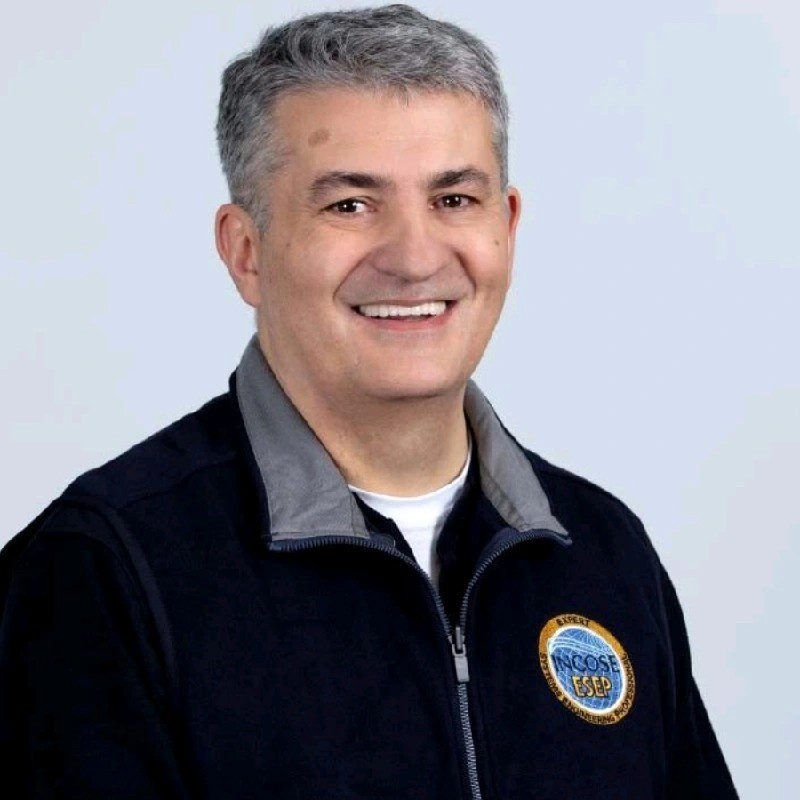
Bernardo Delicado

Catherine Morlet
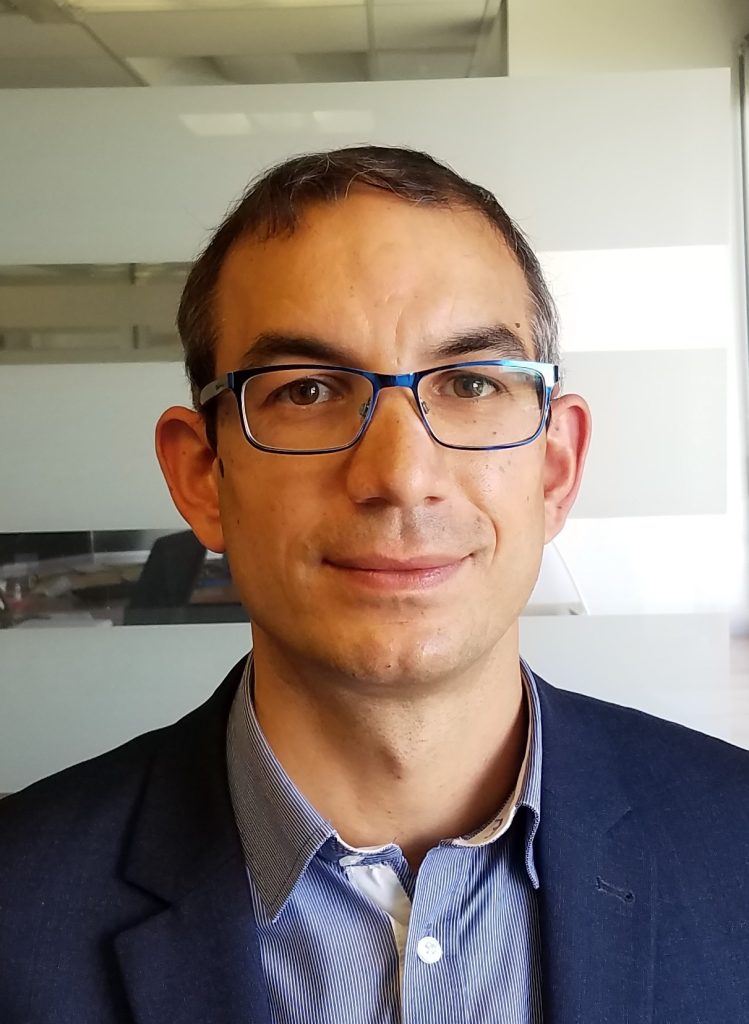
Rémi Boutemy
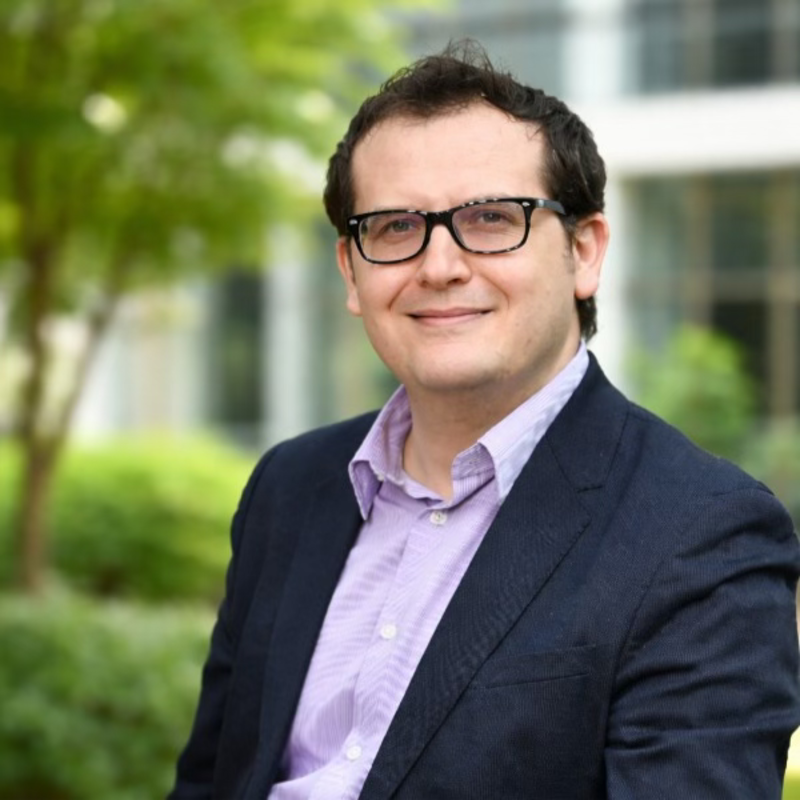
Abdelkrim Doufene
Agnès Mestreau

Nicolas Gueit
| Conference venue
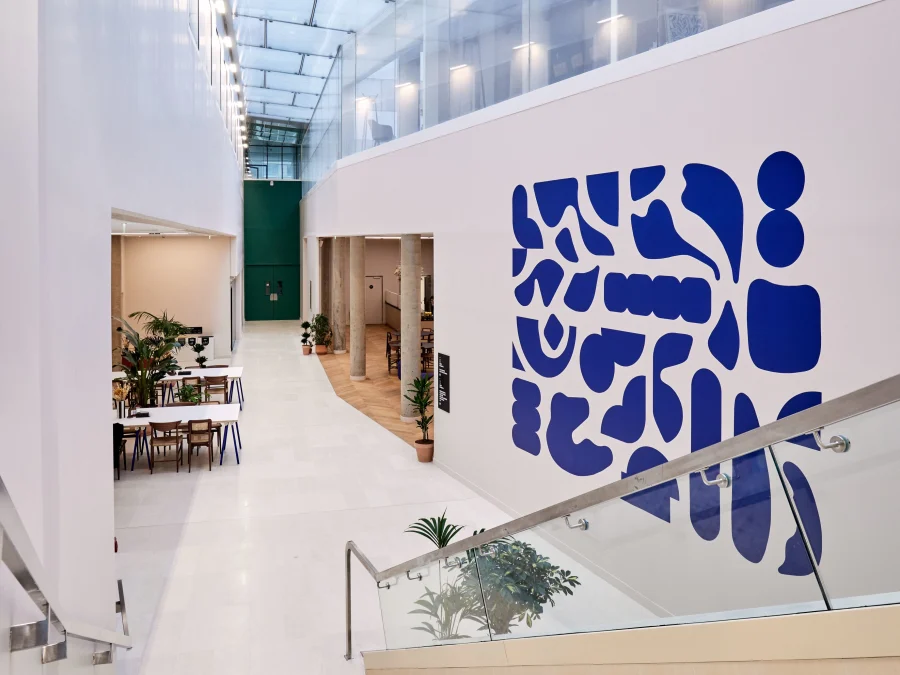
Morning – 179 Avenue Charles De Gaulle, 92200 Neuilly-Sur-Seine